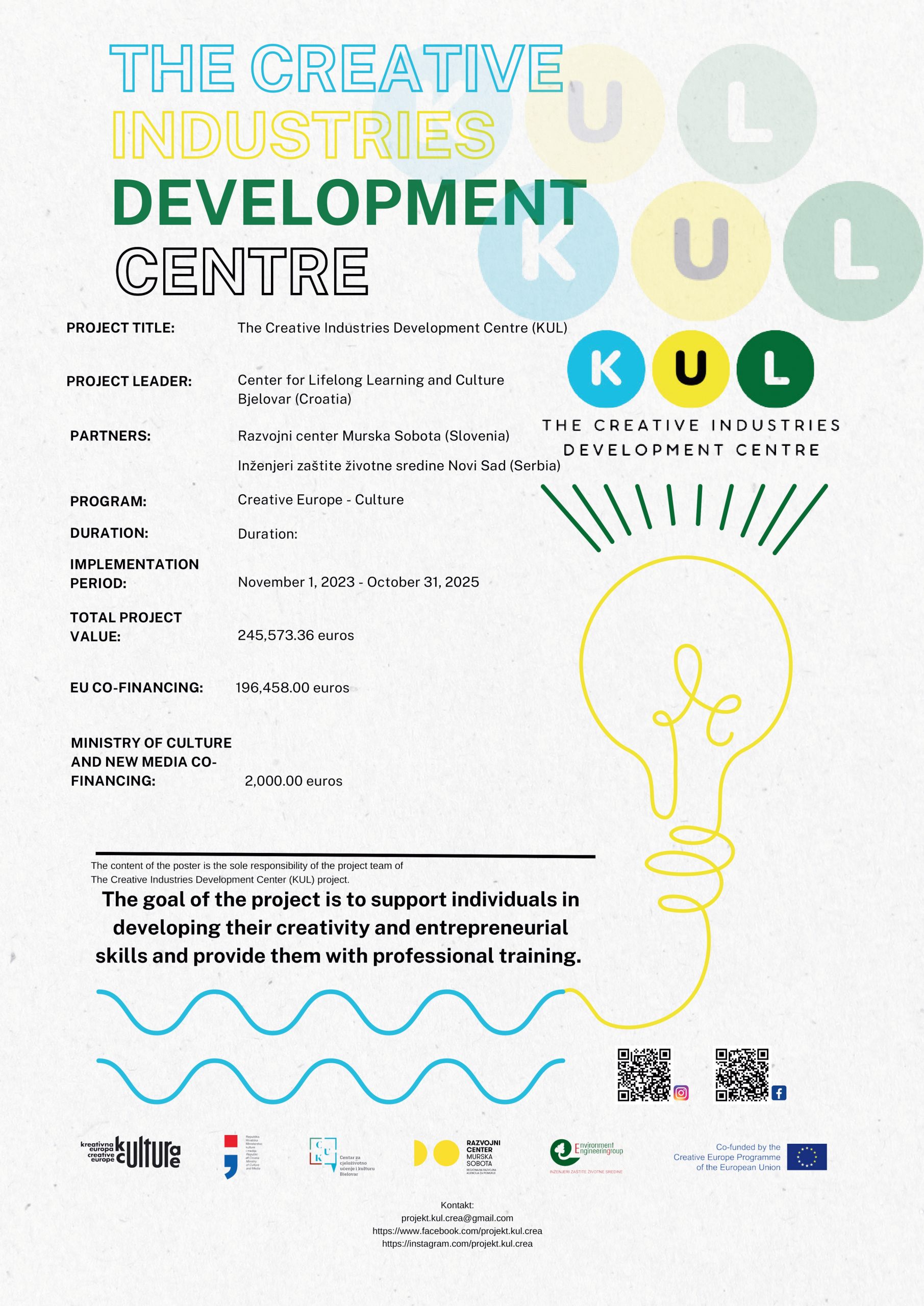

The first international mobility activity within the KUL project (Culture – Art – Local) officially started yesterday in Novi Sad, Serbia. This mobility focuses on participants from the traditional and artistic crafts sector and is hosted by the Serbian partner – Association of Environmental Protection Engineers of Novi Sad.
Participants from Croatia (Center for Lifelong Learning and Culture – CUK Bjelovar) and Slovenia (Development Center Murska Sobota – RCMS) also joined this activity, which will run until Sunday. The aim is to explore good practices in sustainable cultural tourism and artistic heritage, exchange knowledge, and foster cross-border cooperation.
A Warm Welcome and First Activities
The mobility kicked off with a warm welcome, informal networking, and the first round of joint activities. This mobility is part of the Creative Europe-funded KUL project, which promotes capacity-building and innovation in the fields of creative industries, cultural sustainability, and revitalization of local traditions and crafts.
The program includes field visits, workshops, and meetings with local cultural and creative actors in Novi Sad, offering a dynamic learning experience for all involved.
Visit to ATELJE 61 – A Cultural Gem
On the first day of activities, participants visited ATELJE 61 – a unique cultural institution in the Western Balkans. Unlike any other museum or gallery in the region, ATELJE 61 combines a production workshop, a museum collection, and an exhibition gallery under one roof. It is also home to the National Tapestry Collection of the Republic of Serbia.
ATELJE 61 is one of only five similar institutions in Europe, making it an exceptional space for the preservation and promotion of tapestry art and textile craftsmanship. The visit offered insights into how traditional techniques are kept alive through institutional support and creative practice.
Exploring the Creative District – “Chinatown” of Novi Sad
Another highlight of the day was a tour of the so-called “Chinese Quarter” – a former industrial area now transformed into Novi Sad’s Creative District. This area is undergoing an exciting urban and cultural transformation, repurposing old factory buildings into spaces for artists, artisans, and independent cultural initiatives.
From carpenters and auto mechanics to musicians, painters, and designers, the district is becoming a vibrant hub of alternative culture and creative entrepreneurship. Participants explored how culture-driven urban regeneration can serve as a model for sustainable development in other cities.
A Shared Vision for Culture and Sustainability
The KUL project is co-financed by the European Union through the Creative Europe program and aims to strengthen local capacities in cultural tourism, artistic expression, social inclusion through culture, and the promotion of traditional and artistic crafts as resources for sustainable development.
This mobility marks a major milestone in the project, creating space for international learning, peer-to-peer knowledge exchange, and network-building across borders.
The upcoming days will feature more visits, learning activities, and practical insights from Serbia’s cultural and creative sectors. Updates, stories, and photos from the mobility will be published regularly on the official KUL project channels.
Stay tuned!
📍 Follow us on [Facebook] and [Instagram]
📍 Visit the official website for more news and project updates