
Bjelovar became the center of creativity, ideas, and inspiration on October 30, 2025. The final conference of the “The Creative Industries Development Centre (KUL)” project was held at the Centre for Lifelong Learning and Culture Bjelovar, marking the culmination of a two-year initiative that brought together over 380 participants from Croatia, Slovenia, and Serbia — all sharing a common goal: transforming creativity into a driving force for sustainable development.
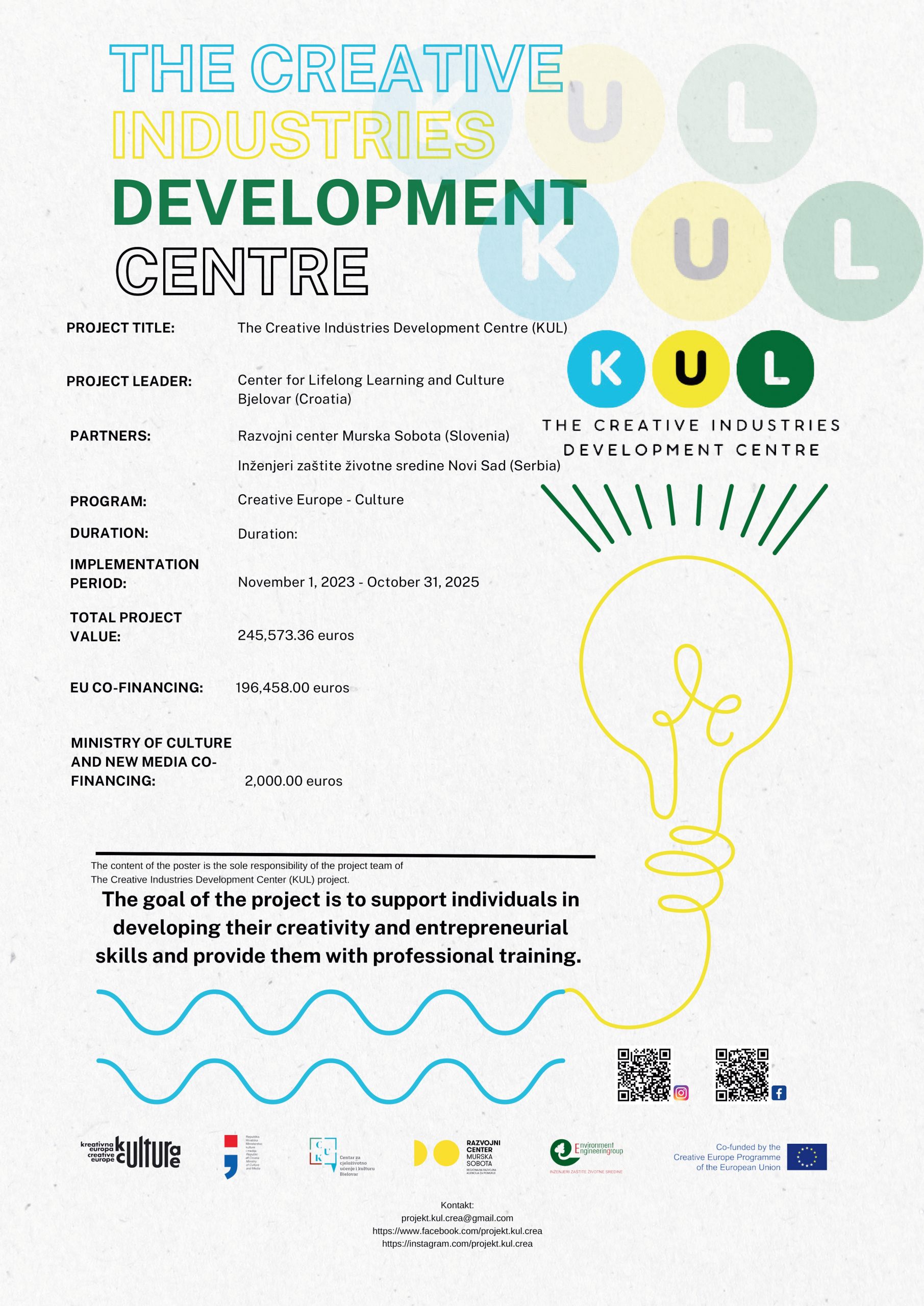
The KUL project was implemented under the Creative Europe – Culture program over 24 months, with a total budget of €245,573.36, including €196,458 co-financed by the European Union.
The project was led by the Centre for Lifelong Learning and Culture Bjelovar (CUK), with partners Development Centre Murska Sobota (Slovenia) and Association of Environmental Protection Engineers Novi Sad (Serbia). Together, they connected three key creative sectors: fashion and design, sustainable cultural tourism, and traditional and artistic crafts.
Education, Creative Workshops, and International Exchange
KUL was more than a project — it was a space for learning, collaboration, and exchange.
Through 30 informative workshops, organized by partners in their respective countries, the project introduced the public to the opportunities offered by creative industries, with 383 participants taking their first steps toward creative entrepreneurship.
The program included lectures on finance, entrepreneurship, internet marketing, and the creative and cultural industries, providing participants with practical knowledge — from business management to digital promotion and personal branding.
In total, over 80 educational activities were delivered, all with a shared goal: empowering individuals to turn their creativity into a source of livelihood.
One of the most exciting components of the project was international mobility, which brought participants to three different cultural and creative environments:
-
Novi Sad (Serbia), June 2–8 – focused on artistic and traditional crafts,
-
Murska Sobota (Slovenia), June 9–15 – focused on sustainable cultural tourism,
-
Bjelovar (Croatia), June 16–22 – focused on fashion and design.
Each mobility fostered new friendships, collaborations, and ideas that later evolved into concrete projects.
KUL Fair – The Project’s Highlight
After two years of work, the KUL Creativity Fair took place in Bjelovar on August 29–30, 2025.
The fair brought together all partners, mentors, and participants, showcasing their creative brands, handmade crafts, fashion collections, souvenirs, artworks, and tourism concepts.
It was a true mini-festival of creativity — full of colors, music, stories, and community spirit.
Campaigns, Platform, and KUL Stories
Two major communication campaigns, “Make Your Dream Come True” and “Live from Creativity”, encouraged the public to recognize creative industries as a serious and sustainable career path.
On the digital platform www.projektkul.com, KUL Stories featured inspirational examples of participants who developed their own brands through the project, proving that creativity can indeed be a professional pursuit.
Final Conference – Looking Back and Forward
The final conference in Bjelovar presented the project’s results as well as the experiences that transformed participants’ perspectives.
Speakers included:
-
Ivana Hrpalo, Director of CUK Bjelovar,
-
Nana Irgolič, Development Centre Murska Sobota,
-
Igor Jezdimirević, Association of Environmental Protection Engineers Novi Sad.
All emphasized the importance of international cooperation, knowledge exchange, and connecting creative sectors.
The conference also served as a platform to present plans for future collaboration and new project development in the region.
Creativity as a Driver of Change
KUL has demonstrated that creativity is not just a talent or hobby — it is a bridge connecting people, cultures, and ideas.
Through education, travel, and collaborative projects, participants discovered that their creativity can be a key to sustainable development and personal success.